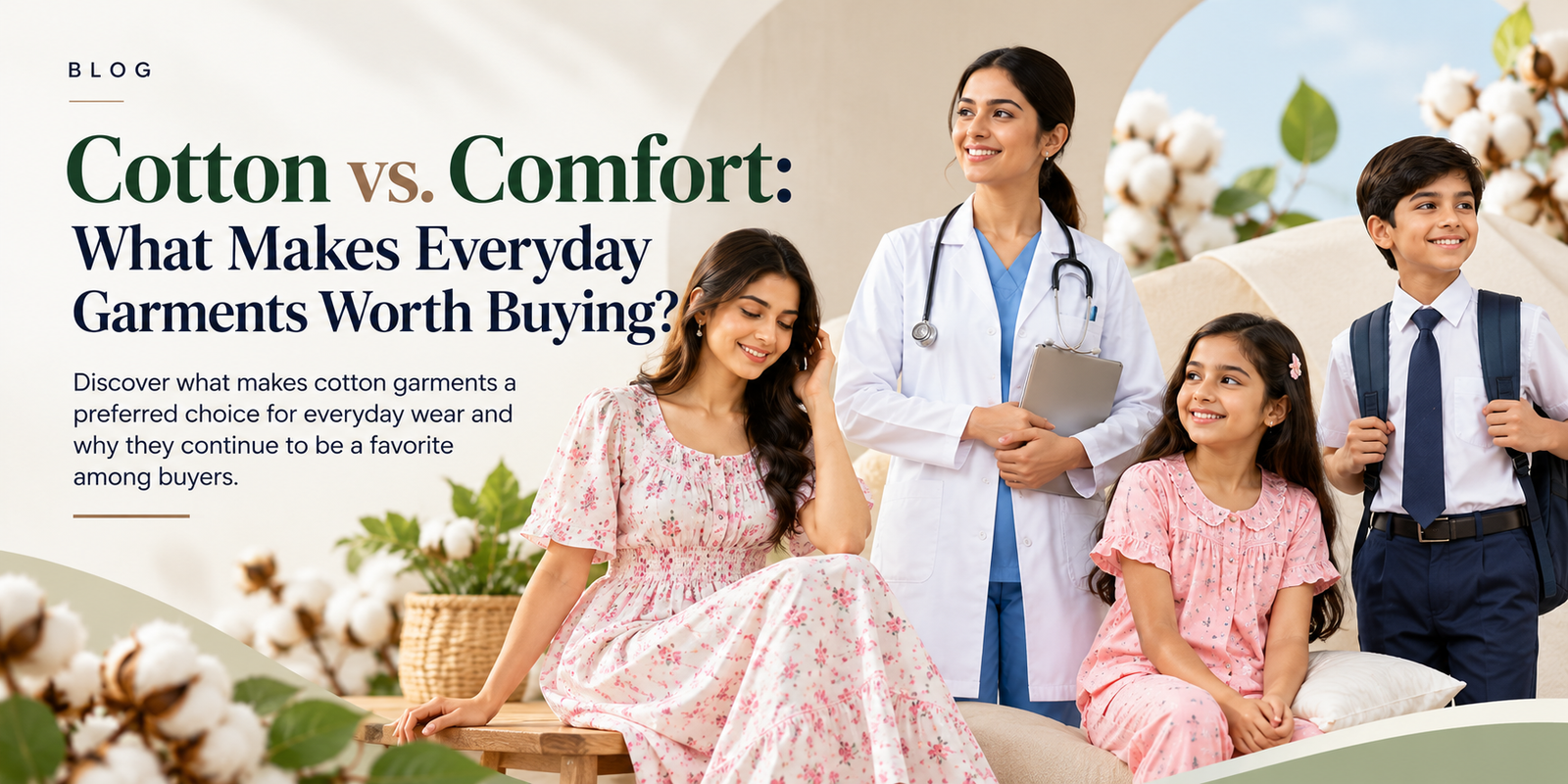
Cotton vs. Comfort: What Makes Everyday Garments Worth Buying?
Imagine wearing clothes that look stylish but feel uncomfortable after just a few hours. No matter how attractive the design is, clothing that feels rough, tight, or heavy can make everyday activities less enjoyable. That’s why comfort, fabric quality, and durability are just as important as appearance when choosing everyday garments. The right outfit should not only look good but also feel pleasant throughout the day.
This is where cotton garments stand out for their softness, breathability, and versatility. From comfortable cotton nighties and stylish frocks to kids wear, school uniforms, and hospital garments, cotton fabrics suit a wide range of everyday needs. But what truly makes a garment worth buying - is it the fabric, the fit, the quality, or the price? Let’s explore how buyers can find the right balance between cotton, comfort, and value for money.
1. Why Comfort Matters in Everyday Clothing
Everyday garments are worn for extended periods, so their comfort can significantly influence the overall wearing experience. Clothing that feels soft, fits properly, and allows easy movement is generally more suitable for daily activities than garments chosen only for their appearance.
Cotton fabric is widely used in everyday clothing because it can feel soft against the skin and allows air to circulate through the material. Its moisture-absorbing properties can also contribute to comfort, although performance varies according to fabric construction, thickness, and finishing.
For retailers and garment buyers, understanding customer comfort preferences is important when choosing products for their collections. Garments intended for daily wear should be evaluated for fabric feel, fit, stitching, and suitability for their intended purpose.
2. Cotton vs. Other Fabrics: What Should Buyers Know?
Cotton is a popular natural fibre, but it is not the only material used in everyday clothing. Polyester, rayon, and blended fabrics are also widely used, with each offering different characteristics.
Cotton Fabric
Cotton is known for its soft feel, breathability, and moisture absorption. It is commonly used in nightwear, casual clothing, children's garments, and many types of uniforms. However, some cotton fabrics wrinkle easily or shrink if they are not processed and cared for properly.
Polyester Fabric
Polyester is often selected for its wrinkle resistance, quick-drying properties, and ability to maintain its shape. It can be useful for garments that require frequent washing, although its breathability and comfort depend on the fabric structure and garment design.
Blended Fabrics
Cotton-polyester blends combine properties of both fibres. Depending on the blend ratio and construction, they may offer a balance of comfort, durability, reduced wrinkling, and easier maintenance.
3. What Makes Cotton Garments Worth Buying?
Cotton garments remain a practical option for many clothing categories because of several useful characteristics.
Softness and everyday comfort: Quality cotton fabrics can provide a comfortable feel for regular use. Fabric finishing and construction also influence the final texture.
Breathability: Cotton fabric allows air to pass through depending on its weave and weight, making it suitable for many warm-weather garments.
Versatile designs: Cotton can be used for a wide range of styles, including nighties, frocks, casual wear, kids wear, and selected uniform applications.
Different fabric options: Cotton garments are available in lightweight, medium-weight, and heavier constructions to suit different requirements.
Familiar care routines: Many cotton garments can be washed at home, although buyers should follow the specific care instructions provided with each product.
These qualities make cotton a useful option for buyers who want a versatile garment range. The actual performance of any product still depends on fabric quality, stitching, finishing, and appropriate care.
4. Choosing Comfortable Cotton Nighties and Frocks
Nightwear and casual frocks are often selected with comfort and ease of movement in mind. Cotton nighties are popular for everyday use because suitable cotton fabrics can feel soft and breathable. Their design, length, sleeve style, and fit can also influence how comfortable they feel.
When purchasing cotton nighties or frocks, buyers should consider:
- Fabric softness and weight
- Comfortable sizing and fit
- Neat seams and secure stitching
- Suitable prints, colours, and designs
- Washing instructions and colour retention
For retailers, offering a variety of designs and sizes can help serve different customer preferences. Wholesale buyers should also check product samples before ordering large quantities, particularly when purchasing a new style or fabric quality.
5. Why Fabric Quality Is Important for Kids Wear
Children need clothing that supports movement and feels comfortable during everyday activities. This makes fabric selection an important consideration when choosing kids wear.
Cotton garments can be suitable for many children's clothing applications because of their soft feel and availability in different fabric weights. However, the overall quality of kids wear depends on more than the fibre alone.
Buyers should examine stitching, seams, fasteners, fit, and the placement of decorative elements. Garments should be appropriate for the child's age and intended activity, with attention to product safety and care instructions.
For clothing retailers, durable construction and practical designs can be important considerations when selecting children's garments. Choosing a balanced range of sizes, colours, and styles can also help meet the needs of different customers.
Also Read: Why Are Cotton Garments Always in Demand? Here's What Buyers Should Know
6. Everyday Uniforms Require Comfort and Durability
School uniforms and professional garments are used regularly, which means they must meet practical requirements beyond appearance. Fabric durability, ease of maintenance, fit, and consistent sizing are important factors when evaluating these products.
Cotton and cotton-blend fabrics may be suitable for some uniforms, depending on the institution's requirements and expected conditions of use. For example, school uniforms may need to withstand frequent washing, while professional garments may require specific fabric performance and care standards.
Doctor aprons and hospital garments should be selected according to their intended healthcare use, hygiene requirements, and applicable institutional specifications. Buyers should not assume that ordinary cotton clothing automatically meets specialised protective or medical requirements.
Before placing a bulk uniform order, institutions should confirm fabric specifications, sizing, colour consistency, stitching quality, and delivery timelines with the supplier.
7. How Retailers Can Select Garments That Customers Prefer
Retailers need to balance customer expectations with purchasing costs, available storage, and expected demand. Selecting garments simply because they are inexpensive can lead to quality concerns if the fabric, fit, or construction does not meet customer expectations.
A more practical approach is to evaluate garments using a consistent checklist.
Understand your customers: Consider their preferred styles, age groups, budgets, and everyday clothing requirements.
Compare fabric quality: Check texture, thickness, construction, and suitability for the intended garment.
Review stitching and finishing: Examine seams, hems, fasteners, and overall workmanship.
Check sizing consistency: Confirm size charts and compare samples when evaluating multiple products.
Evaluate value rather than price alone: Consider quality, expected usability, care requirements, and the supplier's order terms.
These steps can help retailers build a more suitable product assortment and make informed decisions when sourcing everyday clothing.
8. What Wholesale Buyers Should Check Before Ordering
Wholesale garment purchasing requires careful planning because larger orders involve greater financial commitments and inventory decisions.
Before confirming an order, buyers should request clear information about product specifications, minimum order quantities, available sizes, colours, pricing, packaging, and delivery schedules.
It is also helpful to ask whether samples are available and whether repeat orders can follow the same specifications. Buyers should clarify how the supplier handles defective items, variations between batches, and changes to an order.
Varas Fashion offers a range of garments, including cotton nighties, cotton frocks, kids wear, school uniforms, doctor aprons, and hospital garments. Businesses considering bulk garment purchases should discuss their specific requirements and confirm product details, quantities, and supply terms before placing an order.
Clear communication between buyers and suppliers can help reduce misunderstandings and support more consistent purchasing decisions.
9. Finding the Right Balance Between Cotton and Comfort
Choosing everyday garments involves more than deciding whether a fabric is natural or synthetic. Comfort depends on several factors, including fabric construction, fit, garment design, finishing, and the conditions in which the clothing will be worn.
Cotton can be an excellent option for many everyday garments, but different products may benefit from different fabric types or blends. Nightwear may prioritise softness, school uniforms may require frequent-wash durability, and healthcare clothing may need to meet specific professional requirements.
Buyers should match the fabric to the garment's purpose rather than choosing based on a single feature. This approach can help individuals find suitable everyday clothing and help businesses select products that better match their customers' needs.
Conclusion
Cotton and comfort often go hand in hand, but the real value of everyday clothing comes from the right combination of fabric, fit, stitching, design, and durability. Cotton garments remain popular because they offer versatility and a comfortable feel across many clothing categories, from nighties and frocks to kids wear and selected uniforms.
For retailers, wholesalers, and institutional buyers, the best purchasing decisions begin with clear product requirements and careful quality checks. Evaluating samples, comparing specifications, and understanding the intended use of each garment can help buyers choose products that offer practical value.
Varas Fashion provides a range of garment options for businesses exploring everyday clothing and bulk supply requirements. By focusing on suitable fabrics, garment construction, and customer needs, buyers can make more informed choices when selecting clothing for their collections.