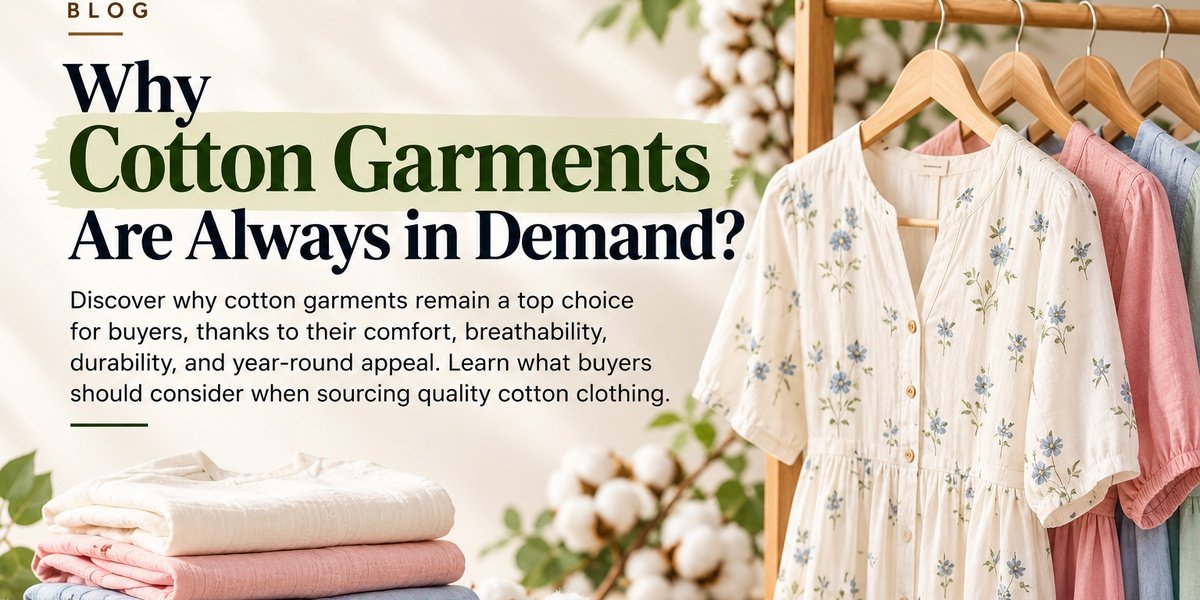
Why Are Cotton Garments Always in Demand? Here's What Buyers Should Know
Ever wondered why cotton garments continue to find a place in wardrobes, clothing stores, and wholesale markets year after year? From comfortable cotton nighties and stylish frocks to kids wear and school uniforms, cotton clothing remains a popular choice for many everyday needs.
But what makes cotton garments so appealing to both customers and clothing businesses? Is it their comfortable feel, versatility, easy styling, or suitability for different types of clothing?
For retailers, wholesalers, and bulk buyers, understanding these factors can help them choose the right products and meet changing customer preferences. Whether you're stocking a clothing store or sourcing garments for institutional use, knowing what to look for can make a real difference in your purchasing decisions.
1. Comfort Makes Cotton Garments a Popular Choice
Comfort is one of the biggest reasons cotton garments continue to attract buyers. Cotton fabric is generally soft to the touch and allows air to circulate through the material. This makes it a suitable option for many everyday clothing applications, particularly in warm weather.
Cotton clothing is commonly used for shirts, frocks, nighties, children's clothing, and other garments designed for regular wear. Its natural feel can make clothing more comfortable during extended periods of use.
For clothing retailers, offering comfortable cotton garments can help meet the preferences of customers who prioritize ease of wear. Buyers should still evaluate the fabric quality, weave, thickness, and stitching before choosing a product, as these factors influence the overall comfort of a garment.
2. Breathability Makes Cotton Suitable for Everyday Wear
Cotton is widely valued for its breathability and moisture absorption. It can absorb moisture from the skin, although drying time depends on the fabric construction and surrounding conditions.
These properties make cotton a practical choice for many types of everyday clothing. Cotton nighties, casual wear, frocks, and lightweight garments are commonly selected for their comfortable feel.
Retailers serving customers in warm climates may find cotton clothing an important part of their product range. However, not every cotton fabric performs identically. Fabric weight, finishing treatments, and the garment design can affect how breathable and comfortable the final product feels.
3. Versatility Across Different Clothing Categories
Another reason for the continued demand for cotton garments is their versatility. Cotton fabric can be used in a wide variety of clothing styles, designs, and applications.
Some common cotton garment categories include:
- Cotton Nighties: Everyday nightwear designed with comfort and ease of movement in mind.
- Cotton Frocks: Casual clothing options available in different colours, patterns, and designs.
- Kids Wear: Children's garments where fabric feel, fit, and durability are important considerations.
- School Uniforms: Uniform shirts, dresses, and other clothing selected according to institutional requirements.
- Doctor Aprons: Professional garments that require suitable fabric, functional design, and appropriate care.
- Hospital Garments: Healthcare clothing selected according to the intended use, hygiene requirements, and laundering conditions.
For retailers and wholesalers, this variety creates opportunities to serve different customer groups through a broader garment collection.
4. Durability and Easy Maintenance Matter to Buyers
Buyers often look beyond appearance when selecting clothing. They also consider how well a garment maintains its shape, colour, and stitching after repeated use and washing.
Well-constructed cotton garments can provide practical everyday wear when the fabric quality, stitching, and finishing are appropriate for their intended purpose. However, durability varies depending on the cotton grade, yarn quality, fabric construction, dyeing process, and garment workmanship.
Before placing a bulk order, buyers should examine the stitching, seams, buttons, fasteners, and finishing. It is also helpful to review the garment's washing instructions and, where possible, test a sample before committing to a larger quantity.
Easy maintenance can be especially important for retailers supplying everyday clothing, school uniforms, and institutional garments that may require frequent laundering.
5. Cotton Garments Offer Variety in Design and Style
Cotton garments are available in numerous designs, colours, prints, and fabric finishes. This flexibility allows clothing businesses to offer products suited to different age groups, preferences, and occasions.
For example, cotton frocks can feature floral prints, simple patterns, or contemporary designs. Cotton nighties may be available in different lengths, sleeve styles, and prints. Kids wear can include colourful everyday clothing, while cotton uniforms often focus on practicality and a consistent appearance.
For garment retailers, maintaining a balanced product assortment can help serve customers with different requirements. Instead of selecting products based only on appearance, buyers should also consider fabric quality, sizing, finishing, and the preferences of their target market.
6. Why Cotton Garments Matter for Wholesale Buyers
Wholesale buyers have different priorities from individual customers. They need to consider product consistency, order quantities, pricing, quality control, and dependable supply.
Working with a suitable cotton garment manufacturer or bulk garment supplier can help businesses source products that match their requirements. Before selecting a supplier, buyers should evaluate the available product range, sample quality, order terms, production capabilities, and communication process.
Varas Fashion offers a range of garments, including cotton nighties, cotton frocks, kids wear, school uniforms, doctor aprons, and hospital garments. Buyers exploring bulk garment sourcing should discuss their required designs, sizes, quantities, and delivery expectations with the supplier before confirming an order.
Clear specifications help reduce misunderstandings and make it easier to assess whether the products are suitable for a retailer's customers or an institution's requirements.
7. What Should Buyers Check Before Purchasing Cotton Garments?
Selecting the right cotton garments requires more than comparing prices. The following factors can help buyers make more informed decisions.
Fabric Quality
Check the fabric's feel, weight, construction, and suitability for the intended garment. If possible, request samples before placing a large order.
Stitching and Finishing
Examine the seams, hems, buttons, and other finishing details. Consistent workmanship can improve the appearance and practical usability of clothing.
Size and Fit
Confirm the available size range and sizing specifications. For bulk purchases, request a size chart and clarify the quantity required in each size.
Colour and Design
Review the available colours, prints, and styles according to your target audience. For repeat orders, clarify whether the same designs and colours can be supplied again.
Pricing and Minimum Order Quantity
Compare quotations based on fabric quality, garment specifications, order quantity, and included services. Ask about minimum order quantities, payment terms, and any additional charges.
Delivery and Order Consistency
Confirm production timelines, dispatch arrangements, and the process for handling quality concerns. Businesses relying on regular stock replenishment should discuss repeat-order requirements in advance.
These checks can help retailers, wholesalers, and institutional buyers select garments that align with their quality standards and purchasing plans.
8. Cotton Garments and Changing Customer Preferences
Customer preferences continue to evolve as clothing styles, shopping habits, and purchasing priorities change. While some buyers look for traditional designs, others prefer modern prints, contemporary cuts, and practical everyday styles.
Cotton garments can accommodate many of these preferences because the fabric is available in different constructions and finishes. Businesses can offer a combination of classic and contemporary products to serve a broader customer base.
Retailers should monitor which products attract interest, which sizes sell consistently, and which designs customers request most often. Reviewing sales patterns can help businesses make more informed stocking decisions and avoid purchasing quantities that do not match actual demand.
It is also important to avoid assuming that every customer prefers cotton for every application. The most suitable fabric depends on the garment's purpose, climate, care requirements, and individual preferences.
9. How to Choose the Right Cotton Garment Supplier
A reliable supplier relationship can make garment purchasing easier, particularly for businesses that place regular or large-volume orders.
Start by identifying your product requirements, including garment categories, fabric specifications, sizes, colours, and quantities. Request samples or product details to assess quality before finalizing the order.
Next, discuss pricing, payment conditions, production timelines, packaging, and delivery arrangements. A clear written quotation or order confirmation can help both parties understand the agreed specifications.
You should also evaluate how effectively the supplier communicates and handles questions about products and orders. For repeat purchasing, consistent specifications and documented order details can help reduce variation between batches.
Varas Fashion serves buyers looking for garments such as cotton nighties, kids wear, frocks, school uniforms, doctor aprons, and hospital garments. Businesses can review their requirements and enquire about suitable products and bulk-order options before making a purchasing decision.
Conclusion
Cotton garments continue to be an important part of the apparel market because of their comfortable feel, breathability, versatility, and availability across many clothing categories. From cotton nighties and frocks to kids wear, school uniforms, and selected professional garments, cotton fabric offers a wide range of applications.
For buyers, the key is to look beyond the fabric name and evaluate the quality of the material, stitching, sizing, finishing, price, and supplier reliability. Retailers and wholesalers should also consider their customers' preferences, expected sales, and stock requirements before placing bulk orders.
By making informed purchasing decisions and selecting products suited to their intended use, businesses can build a more practical garment assortment and serve their customers more effectively.